Steel Beam Cost UK: 2026 Prices for RSJs, Fitting and Fees
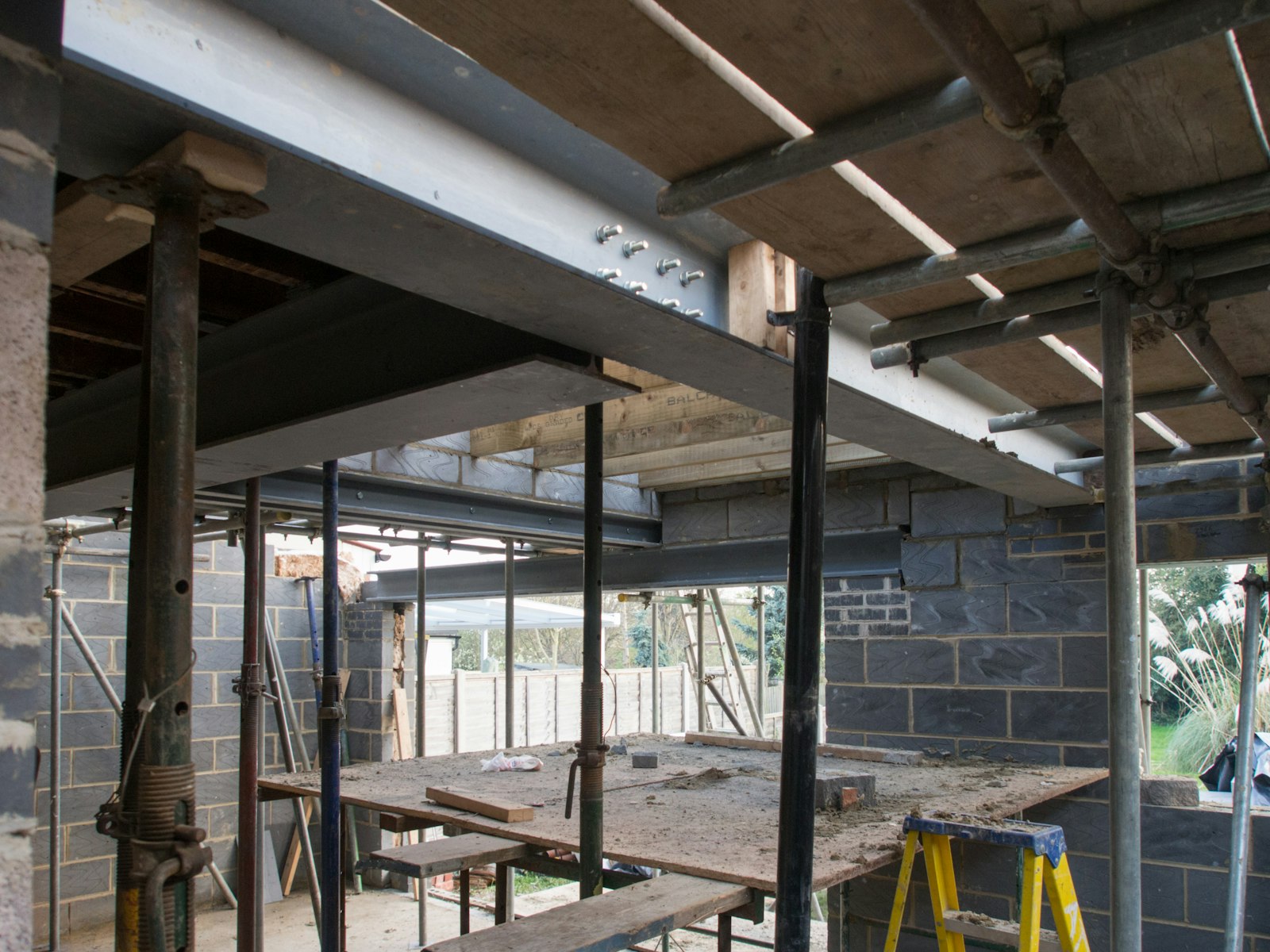
A steel beam cost for a typical home job is somewhere between £800 and £2,500 once it’s fitted, according to most UK price guides, but the beam itself is often the cheapest part. Labour, temporary propping, the structural engineer, building control and making good usually cost more than the steel. This guide shows what steel beams cost per metre in 2026, what fitting costs by span, the fees you can’t avoid, and two itemised worked examples.
Quick answer
- Steel only: roughly £27–£80 per metre ex VAT from stockholders (checked 9 Nov 2026), and £50–£300 per metre in builders’ price guides, which include more margin and heavier sizes.
- Fitted: about £800–£2,500 for a standard opening (MyJobQuote, MyBuilder), rising to £2,500–£5,000 for a 3–4m knock-through (Trade2Base) and £5,000+ for big or double beams.
- Fees on top: structural engineer £250–£800; building control from £230 (West Northamptonshire) to £528 or more (Redbridge).
- Our worked examples: about £1,970–£3,700 for a 2.7m opening in Northampton and £2,900–£5,900 for a 4.5m knock-through in Ilford, all in.
- Steel is getting dearer: fabricated structural steel prices rose 19.9% in the year to September 2026 (GOV.UK).
Last checked: 16 November 2026. England rules and fees.
Steel beam cost in 2026: what five price guides say
Price guides don’t agree, mainly because they bundle different things into one figure. Some quote the beam and labour only. Others include props, padstones and plastering. None of them include every fee. Here’s what each one says:
| Guide (date) | Steel only | Fitted cost | What else they quote |
|---|---|---|---|
| MyJobQuote (6 Nov 2026) | £50–£100 per metre | £800–£2,500; average about £1,400 | Engineer £250–£500; building regs £200–£500; extras add about £850–£1,650 |
| BestBuilders (18 Aug 2026) | £150–£450 per beam | £1,200–£2,500 for a door-width opening; £1,750–£4,000 with wall removal | Engineer £250–£750; building control £150–£350; temporary works £150–£500; making good £300–£900 |
| Trade2Base (14 Jun 2026) | Often £150–£600 per job | £1,200–£2,500 (1.5–2.5m); £2,500–£5,000 (3–4m); £5,000–£10,000+ (5m+ or goalpost) | Engineer £300–£800; building control £300–£500; padstones £40–£120 a pair |
| MyBuilder (undated) | £50–£120 per metre for a universal beam | £800–£2,500 typical; £225–£570 per metre supplied and fitted | Engineer £300–£500; building regs £200–£500; London 20–30% higher |
| Homebuilding & Renovating (7 Mar 2026) | £100–£300 per metre | Up to £5,000 for a complex single RSJ | Labour £500–£2,000 (quantity surveyor’s estimate) |
These are each guide’s own published figures, not our quotes. Most exclude VAT: MyJobQuote says to add 20% unless the builder says otherwise.
Put together, a small or standard opening lands at £800–£2,500 before fees, and a full knock-through between two rooms is more like £2,500–£5,000. The big jumps come from span, access and how much of the house has to be held up while the beam goes in.
Steel beam cost per metre (supply only)
If you’re pricing the steel alone, stockholders are far cheaper than the per-metre figures in builders’ guides. These are prices we checked on 9 November 2026:
| Section (depth × width × kg/m) | Supplier | Price ex VAT | Works out per metre |
|---|---|---|---|
| 178 × 102 × 19 UB, 2m length | Ainscough Metals | £54.72 | £27.36 |
| 254 × 102 × 22 UB, 8m length | Ainscough Metals | £253.44 | £31.68 |
| 254 × 146 × 37 UB, 6.5m length | Ainscough Metals | £346.32 | £53.28 |
| 254 × 146 × 37 UB, 7.5m length | Ainscough Metals | £399.60 | £53.28 |
| 203 × 102 × 23 UB, cut to length | Metals4U | £78.65 per metre | £78.65 |
Prices checked 9 November 2026, before delivery and VAT. Stock prices move weekly; get a current quote. Your engineer chooses the section, not the supplier.
Two things explain the spread. First, heavier sections cost more: a 254 × 146 × 37 beam weighs 37kg per metre, so it costs about twice as much per metre as a 19kg beam. Second, cut-to-length retail prices (like Metals4U’s) carry a premium over buying a stock length and cutting it yourself, but you don’t pay for steel you don’t need. MyBuilder puts the average at about £3.50 per kg, which is a handy check: a 3m beam at 25kg per metre is about £262.50 by their sum.
RSJ, UB or steel beam: is there a difference?
In everyday use, no. “RSJ” (rolled steel joist) is the name most builders use for any I-shaped steel beam. Technically, most beams fitted in UK homes today are universal beams (UBs), which have parallel flanges. A true RSJ has tapered flanges and is rarely stocked now. Your engineer’s calculations will name a UB size such as 203 × 133 × 25, and that’s what you or your builder will order.
Steel beam installation cost by span
MyJobQuote breaks its figures down by span, which is the most useful way to budget. These cover the beam and the labour to fit it:
| Span | Steel (supply only) | Labour | Fitted total |
|---|---|---|---|
| 1m | £50–£100 | £400–£450 | £450–£570 |
| 2m | £100–£200 | £550–£600 | £650–£840 |
| 3m | £150–£300 | £650–£800 | £800–£1,100 |
| 4m | £200–£400 | £700–£800 | £900–£1,280 |
| 5m | £250–£500 | £900–£1,000 | £1,150–£1,500 |
Source: MyJobQuote, updated 6 November 2026. Excludes engineer, building control, propping, delivery, skip and making good. Builders’ day rates in the same guide are £250–£400.
Remember that the beam is always longer than the opening. It needs to bear onto the wall at each end, usually on a concrete padstone, so a 3m opening typically needs a beam of about 3.3m or more. Your engineer sets the minimum bearing.
The other costs of fitting a steel beam
The fitted price in most guides leaves out a lot. This is what a realistic budget includes:
| Item | Typical cost | Source |
|---|---|---|
| Structural engineer’s calculations | £250–£800 | MyJobQuote £250 (calcs only) to £500 (with site visit); BestBuilders £250–£750; Trade2Base £300–£800 |
| Building control | £230–£739 (council fees below) | West Northamptonshire and Redbridge 2026/27 schedules |
| Props, strongboys and padstones | £100–£200 | MyJobQuote, MyBuilder |
| Temporary works on bigger jobs | £150–£500 | BestBuilders |
| Steel delivery | £50–£150 | MyJobQuote, MyBuilder |
| Making good (plaster, patching floors) | £300–£900; or £20–£30 per m² for plastering | BestBuilders; MyJobQuote |
| Skip hire | £200–£300 | MyJobQuote |
| Crane or telehandler (large beams only) | £200–£800 per day | MyJobQuote £200–£500; Trade2Base £300–£800 |
Structural engineer
You’ll almost always need one. Building control will want calculations showing the beam size, the bearings and the padstones, and they’re what your builder orders from. A simple single-beam calculation is at the bottom of the range; a site visit, drawings or a beam carrying a floor and roof above push it up. Our structural engineer cost guide has more detail.
Building control fees in 2026
Fitting a steel beam to replace a load-bearing wall is structural work, so it needs building regulations approval. Councils charge by the estimated cost of the work. Two examples from April 2026:
| Council | Work up to £2,000 | £2,000–£5,000 | £5,000–£10,000 | VAT |
|---|---|---|---|---|
| West Northamptonshire (Table 3, domestic alterations) | £230 | £295 | Individually quoted | Included |
| Redbridge (Table 3, other works) | £370 | £528 | £739 | Included |
Same charge for full plans or building notice at both councils. Redbridge’s regularisation fee (for work already done without approval) works out at 125% of the table fee, e.g. £462.50 instead of £370. The estimated cost excludes VAT and professional fees.
Building control will check the beam size matches the calculations, that the padstones and bearings are right, and that the steel is protected against fire, often by boxing it in with plasterboard. For more on fees across England, see our building regulations cost guide.
Party wall notice
If the beam bears into a wall you share with a neighbour, which is common in terraces and semis, the Party Wall etc. Act 1996 applies. Cutting into a party wall to seat a beam or padstone needs a party structure notice served at least two months before work starts. If your neighbour consents in writing, there’s no surveyor’s fee. If they dissent, you’ll need a party wall award. Read our party wall agreement guide before you book the builder.
Where steel beams are used in home projects
Most people searching for a steel beam price are planning one of four jobs. The beam does a different job in each, and that changes what you pay for around it.
Knocking two rooms into one
The classic job: opening a kitchen into a dining room, or a front room into a back room. The beam replaces the load-bearing wall and carries the floor joists, and sometimes an upstairs wall, above. This is where the per-span prices above fit best. The main extras are propping the floor above and making good the ceilings either side.
Rear and side extensions
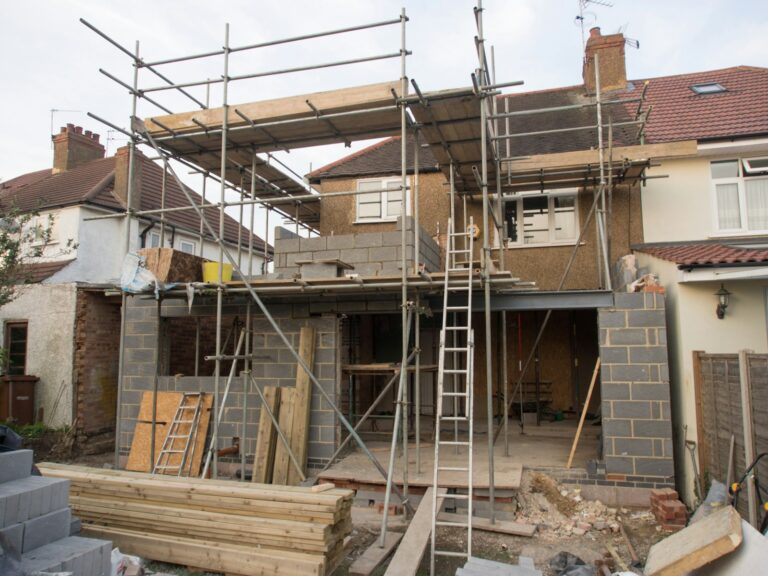
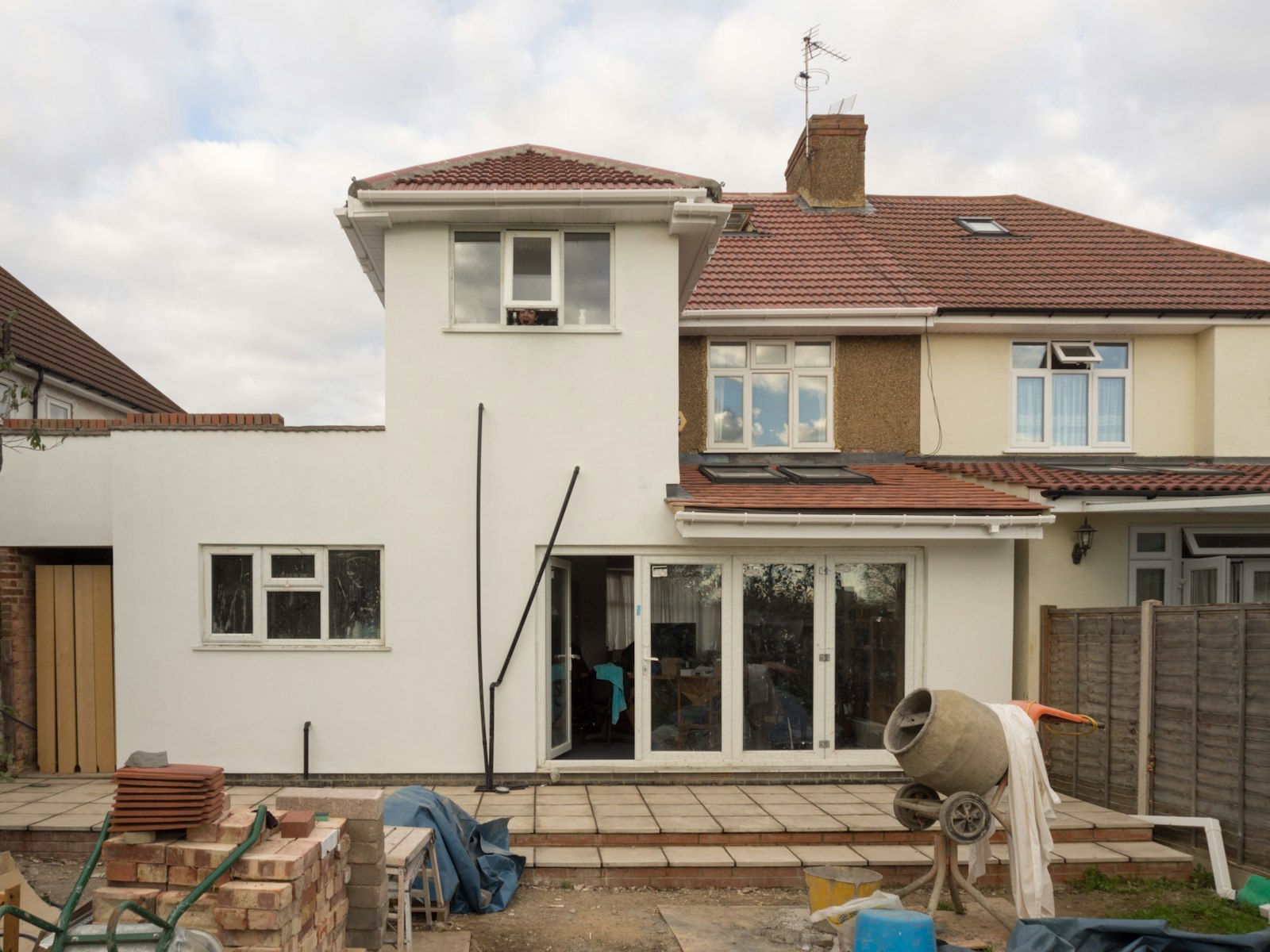
When you build an extension and want it open to the existing house, a beam goes in where the old back or side wall was. Side return extensions in terraces often need a longer beam, or a steel frame, because they open up both the back wall and part of the side wall. Here the beam is usually priced inside the extension quote, but it’s worth asking for it as a separate line, so you can compare builders properly.
Loft conversions
Most loft conversions need steel. Beams are often needed to carry the new floor, because ceiling joists aren’t designed to take the weight of a bedroom, and to support the roof where purlins or rafters are cut for a dormer. Getting long beams up through a house into a loft is the hard part. They’re often brought in through the roof before it’s opened up, or in sections that are bolted together. That’s why loft steels can cost more to fit than a similar beam downstairs.
Wider door openings
Fitting bifolds or sliding doors where there was a window or a narrow door usually means a wider opening in an external wall. A steel beam, or a heavy-duty lintel for shorter spans, goes in above the new doors. The engineer will also check that the beam won’t deflect enough to jam the doors, which can mean a deeper beam than the load alone needs.
Whatever the job, the same rule applies: the engineer’s calculations come first. Without them, no builder can give you a firm price for the steel, and building control won’t approve the work.
What pushes the price of a steel beam up or down
- Span and load. A longer beam, or one carrying a floor, a wall and part of the roof above, needs a deeper, heavier section. Weight drives both the steel cost and the labour.
- Access. A beam has to be carried in and lifted into place. A 5m beam at 37kg per metre weighs over 180kg. Narrow hallways, upper floors and lofts all add time. Very long beams may come in two pieces bolted together on site, or need a crane.
- What’s above. Every load has to be propped while the wall comes out. Upstairs walls, chimneys and floor joists running the wrong way make propping slower.
- Double beams and goalposts. Wide openings sometimes need two beams side by side, or a steel frame with posts. Trade2Base puts these at £5,000–£10,000+.
- Location. MyBuilder says London and the South East are typically 20–30% higher than the national average.
- Making good. Cutting out a wall damages ceilings, floors and plaster either side. The bigger the opening, the more there is to put right.
- VAT. Most guide prices exclude it. A VAT-registered builder will add 20%.
Why steel beam prices are rising
Steel has become noticeably dearer. The government’s monthly building materials statistics, published on 4 November 2026, show fabricated structural steel up 19.9% in the 12 months to September 2026, against 7.2% for all construction work. The beam is only part of the bill, so a 20% rise in steel doesn’t mean a 20% rise in the job. But if you were given a price last year, expect the steel line to have gone up. The next release is due on 2 December 2026.
Worked examples
These are our own estimates, built item by item from the 2026 guide prices, stockholder prices and council fees above. They’re not quotes. Our pricing method explains how we put figures together.
Worked example 1: 2.7m opening between kitchen and dining room, Northampton
A three-bed semi in Northampton. The owners want a 2.7m opening in a ground-floor load-bearing wall, using a 3m beam (203 × 102 × 23 UB, if the engineer agrees that size works). Work is under £2,000 at the low end, so West Northamptonshire’s fee is £230; at the high end it falls in the £2,001–£5,000 band, at £295.
| Item | Low | High |
|---|---|---|
| Structural engineer | £250 | £750 |
| Building control (West Northants, incl VAT) | £230 | £295 |
| Steel beam, 3m | £236 (Metals4U, ex VAT) | £300 (MyJobQuote 3m top) |
| Delivery | Included | £150 |
| Labour to fit (3m span) | £650 | £800 |
| Props, strongboys, padstones | £100 | £200 |
| Making good | £300 | £900 |
| Skip | £200 | £300 |
| Total | £1,966 | £3,695 |
Decorating, new flooring across the join and any electrics moved out of the old wall are extra. Add VAT if your builder is registered.
Worked example 2: 4.5m knock-through between two reception rooms, Ilford
A 1930s terrace in Ilford. The owners want to open the front and back reception rooms into one. The 4.5m opening needs a beam of about 5m or more, so the builder buys a 254 × 146 × 37 stock length and cuts it. Labour is priced at London rates: MyJobQuote’s 5m labour plus 20% at the low end, and Trade2Base’s two-builder, three-day figure plus 30% at the high end. The itemised work stays between £2,000 and £5,000, so Redbridge’s fee is £528 either way.
| Item | Low | High |
|---|---|---|
| Structural engineer | £300 | £750 |
| Building control (Redbridge, incl VAT) | £528 | £528 |
| Steel beam 254 × 146 × 37 | £346 (6.5m, ex VAT) | £480 (7.5m, incl VAT) |
| Delivery | £50 | £150 |
| Labour to fit (London rates) | £1,080 | £2,600 |
| Props, strongboys, padstones | £100 | £200 |
| Making good | £300 | £900 |
| Skip | £200 | £300 |
| Total | £2,904 | £5,908 |
If the work is estimated at over £5,000, Redbridge’s fee rises to £739. In a terrace the beam often bears into the party wall, so allow for a party structure notice, and for surveyor’s fees if your neighbour doesn’t consent. Bigger knock-throughs also tend to become a wider project. If you’re removing the wall completely, see our load-bearing wall removal cost guide.
Need a steel beam fitted? Tell us about the opening you want and we’ll pass your details to one vetted local builder who can arrange the engineer, building control and the steel.
How a steel beam goes in, step by step
- Engineer’s calculations. The engineer visits or works from photos and measurements, then specifies the beam size, bearing length, padstones and any fire protection.
- Building control and party wall. Apply to your council or a private approver. Serve any party wall notice at least two months ahead if the beam goes into a shared wall.
- Order the steel. The builder orders the beam cut to length, often with a red oxide primer coat.
- Props go in. Holes are cut above the opening and needles with props, or strongboys, hold up the wall and floor above.
- Wall comes out and padstones go in. The opening is cut and concrete padstones are bedded at each end.
- Beam goes up. The beam is lifted onto the padstones and packed tight to the masonry above with slate or steel packers and dry-pack mortar.
- Inspection and fire protection. Building control inspects before the beam is boxed in, usually with plasterboard, then plastered.
- Completion certificate. Keep it with the engineer’s calculations. A buyer’s solicitor will ask for both.
MyJobQuote puts a standard job at one to two days, or two to four days for larger or more complex work. The waiting is usually for the engineer, building control and any party wall notice, not the fitting itself.
Can you save money on a steel beam?
- Get the engineer first. A builder pricing without calculations has to guess the beam size. Calculations let you compare like with like.
- Combine jobs. If you’re widening an opening for new doors, do it as part of the same job. Our bifold doors cost guide covers widening an opening for wider doors.
- Use a lintel for small openings. For a new doorway in an internal wall, a steel or concrete lintel may be enough. MyBuilder prices steel lintels at £16–£60. Your engineer will say if a lintel works.
- Don’t fit it yourself. Propping a house while a wall comes out is skilled, risky work. The beam still needs calculations, approval and inspection whoever fits it.
Steel beam cost FAQs
How much does a steel beam cost?
In 2026, a steel beam fitted in a typical home costs about £800–£2,500 before fees, according to MyJobQuote and MyBuilder. A knock-through between two rooms is more like £2,500–£5,000 (Trade2Base). Add £250–£800 for a structural engineer and a building control fee from about £230.
How much does a steel beam cost per metre?
From stockholders, typical domestic universal beams cost about £27–£80 per metre ex VAT (prices checked 9 November 2026). Builders’ price guides quote £50–£300 per metre, because they include heavier sections and the builder’s margin.
How much does it cost to install an RSJ?
Labour alone is about £400–£1,000 depending on span, according to MyJobQuote’s 2026 figures, or £500–£2,000 according to a quantity surveyor quoted by Homebuilding & Renovating. Props, padstones, delivery, making good and a skip usually add several hundred pounds more.
Do I need a structural engineer for a steel beam?
Almost always. Building control needs calculations showing the beam size, bearings and padstones, and the builder needs them to order the right steel. Expect to pay £250–£800.
Do I need building regulations approval to fit a steel beam?
Yes, if it replaces a load-bearing wall or carries any structural load. It’s structural work under building regulations. In 2026, council fees range from £230 in West Northamptonshire to £528 or more in Redbridge for typical jobs.
How long does it take to fit a steel beam?
One to two days for a standard job, or two to four days for a large or complex one, according to MyJobQuote. Allow longer for making good and plastering, and for the engineer and building control before work starts.
Do I need a party wall agreement to put in a steel beam?
If the beam bears into a wall you share with a neighbour, yes. Under the Party Wall etc. Act 1996 you must serve a party structure notice at least two months before work starts. If your neighbour agrees in writing, you don’t need a surveyor.
Why have steel beam prices gone up?
Fabricated structural steel prices rose 19.9% in the year to September 2026, according to government building materials statistics published in November 2026. Steel is only part of the cost of fitting a beam, so the total job goes up by less than that.
Sources
- MyJobQuote: The RSJ cost guide: pricing for your UK project 2026 (updated 6 Nov 2026)
- BestBuilders: RSJ cost UK (updated 18 Aug 2026)
- Trade2Base: Steel beam costs UK (14 Jun 2026)
- MyBuilder: Cost of installing an RSJ
- Homebuilding & Renovating: RSJ costs should never be worked out online, warn experts (7 Mar 2026)
- Stockholder prices: Ainscough Metals and Metals4U websites (checked 9 Nov 2026)
- West Northamptonshire Council: Building control fee schedule (from 1 April 2026)
- Redbridge Council: Building control fee schedule, 1 April 2026; Removing load bearing walls
- Department for Business and Trade: Building materials and components statistics, monthly commentary (4 Nov 2026)
- Party Wall etc. Act 1996, section 3 (party structure notices)
This guide is general information for England, checked on 16 November 2026. It isn’t structural, legal or professional advice. Prices and fees change, and only a structural engineer can size a beam for your home. Building control has the final say on what your project needs.