Underfloor Heating Cost in 2026: Prices per m², Running Costs and Examples
The underfloor heating cost for most UK homes in 2026 is about £40–£90 per m² for an electric system and £100–£190 per m² for a wet (water) system, fitted. That’s what MyJobQuote’s October 2026 guide gives, and five other guides land in a similar range. This page compares them, explains what pushes the price up, shows what it costs to run at today’s energy price cap, and works through three real-world examples: a new extension, an en-suite and a whole ground floor.
Quick answer
- Electric underfloor heating: £40–£90/m² fitted (new build £40–£80, older home £50–£90). A 4m² en-suite costs about £240–£300.
- Wet underfloor heating: £100–£190/m² fitted (new build £100–£140, retrofit £150–£190). A 20m² living room costs about £1,800–£2,200.
- Running costs: on the October–December 2026 price cap, our illustrative 15m² room costs about £216 a winter on electric, £73 on a gas boiler or £62 on a heat pump.
- Best value: wet systems in new extensions, where the screed is being laid anyway. Electric suits small rooms like bathrooms.
Prices: MyJobQuote, updated 20 October 2026. Energy prices: Ofgem cap, 1 October–31 December 2026. Last checked: 16 November 2026.
How much does underfloor heating cost per m²?
The biggest factor is which type you choose. Electric systems use heating mats or cables under the floor finish. Wet systems pump warm water from a boiler or heat pump through plastic pipes, usually set in screed or fitted in grooved boards.
| System | New build / extension | Older home (retrofit) | Overall range |
|---|---|---|---|
| Electric (dry) | £40–£80/m² | £50–£90/m² | £40–£90/m² |
| Wet (water) | £100–£140/m² | £150–£190/m² | £100–£190/m² |
Source: MyJobQuote underfloor heating cost guide, updated 20 October 2026. Prices include materials and labour.
Retrofit costs more because the old floor has to come up, or the new system has to be built on top of it with low-profile boards. Either way, floor levels change, so doors may need trimming and thresholds adjusting.
Underfloor heating cost by room
| Room (size) | Electric | Wet |
|---|---|---|
| Downstairs toilet (2m²) | £160–£180 | £340–£380 |
| En-suite bathroom (4m²) | £240–£300 | £600–£720 |
| Medium kitchen (12m²) | £600–£900 | £1,200–£1,500 |
| Conservatory (14m²) | £630–£980 | £1,300–£1,600 |
| Living room (20m²) | £800–£1,200 | £1,800–£2,200 |
Source: MyJobQuote, October 2026.
Small rooms cost more per m² because there’s a fixed amount of work (thermostat, wiring or manifold connection) whatever the size. That’s why a 2m² cloakroom on a wet system costs well over £150/m².
Six UK price guides compared
Price guides use different assumptions, so it helps to look at several. Here’s what six of them say:
| Guide | Electric | Wet | Notes |
|---|---|---|---|
| MyJobQuote (Oct 2026) | £40–£90/m² | £100–£190/m² | Fitted. Separate new-build and retrofit ranges. |
| Checkatrade (Jun 2026) | £50–£75/m² new; £60–£85/m² retrofit | £85–£100/m² new; £95–£110/m² retrofit | Whole-house averages: electric £4,000, wet £8,000. Add 10–15% contingency. |
| Screwfix (undated) | £50–£75/m² supply; £3,500–£5,500 for 60m² | £70–£140/m² supply; £5,700–£11,900 for 60m² | Labour: electric £500–£1,000, wet £1,500–£3,500. |
| Energy Saving Trust (Oct 2025) | £50–£85/m² | £85–£110/m² | Quotes Checkatrade’s figures. |
| Warmup (Apr 2026) | Kits from £14.58/m² ex VAT; 10m² kit with insulation and thermostat about £922 + VAT | Kits about £25/m² ex VAT (40m²) | Manufacturer. Kit prices only; it estimates about £400 a room to fit. |
| The Underfloor Heating Store (undated, 2026) | £2,300–£2,600 new; £4,000–£4,500 renovation (60m² home) | £5,500–£6,500 new; about £9,000 renovation (60m² home) | Retailer. Floor insulation about £1,400 on average. |
MyJobQuote’s wet figures are the highest, mostly because they include more of the floor work. Checkatrade and the Energy Saving Trust are lower but add a contingency. Manufacturer and retailer prices are for kits, so you’ll pay more once a heating engineer, electrician and floor layer are involved. For budgeting, we’d use MyJobQuote’s ranges and treat the lower guides as a best case.
What affects the cost of underfloor heating?
1. Wet or electric
Electric is cheaper and quicker to fit: Screwfix says one to two days, against three to seven for wet. But it costs more to run. Wet systems cost more up front, need a manifold and a heat source, and usually need screed or grooved boards. Over years of use they’re far cheaper to run.
2. New floor or existing floor
If you’re building an extension or laying a new floor anyway, the insulation and screed are already in the budget. You’re only paying for pipes, a manifold and controls. Retrofitting means lifting the old floor or building up on top of it, and that’s where the extra £50/m² or so in MyJobQuote’s retrofit range comes from.
3. Insulation and screed
Heat goes down as well as up. Without insulation underneath, you’re heating the ground. MyJobQuote puts PIR floor insulation at about £220–£400 for a 10m² concrete floor, and screeding at around £430 for an average room. Screed also needs time to dry before you can lay most floor finishes, so allow for that in the programme.
4. Floor finish
Stone and ceramic tiles pass heat well. The Energy Saving Trust says carpet plus underlay should have a combined tog rating of 2.5 or lower, and vinyl or laminate shouldn’t be too thick. Thick carpet makes any system slower and dearer to run.
5. Heat source and controls
A wet system needs a boiler or heat pump that can supply it. Connecting to an existing boiler is usually straightforward, but you’ll need a mixing valve or a boiler that can run at low temperatures, plus a thermostat for each zone. Smart thermostats add to the bill but help keep running costs down.
6. Where you live
Labour is dearer in London and the South East. Warmup quotes fitters at £200–£300 a day, though its own FAQ says £100–£300. Our pricing method explains how we adjust our own estimates by region.
Is underfloor heating expensive to run?
Electric underfloor heating can be. Wet underfloor heating usually isn’t. The difference comes down to fuel price. On Ofgem’s price cap for 1 October to 31 December 2026, electricity costs 26.32p per kWh and gas 7.97p per kWh. The government has removed VAT from electricity bills from 1 October 2026 to 31 March 2027; gas still carries 5% VAT.
To make that real, we’ve worked out a winter’s heating for one 15m² room. This is our own illustration, not a measured figure. We’ve assumed the floor draws 75 watts per m², runs four hours a day and is used for 182 days (October to March). That’s 819kWh of heat.
| System | Energy bought | Unit price | Cost per winter (15m²) |
|---|---|---|---|
| Electric underfloor heating | 819kWh electricity | 26.32p | about £216 |
| Wet, gas boiler (90% efficient) | 910kWh gas | 7.97p | about £73 |
| Wet, air source heat pump (SCOP 3.5) | 234kWh electricity | 26.32p | about £62 |
Our illustrative estimate, using the Ofgem Oct–Dec 2026 cap (unit rates only; standing charges excluded). Your costs depend on insulation, floor finish, thermostat settings and how long the heating is on. The cap changes every three months; the next one is announced on 25 November 2026.
Other guides reach similar conclusions. MyJobQuote puts a 20m² living room at £230–£460 a year on electric and £100–£200 on wet. Nu-Heat’s August 2026 figures for a 20m² room are £990 a year electric against £215 wet, using a higher electricity price and longer heating hours. Wet systems also need occasional servicing, which MyJobQuote puts at around £80–£150 a year.
So electric is fine for a bathroom floor you warm for an hour or two in the morning. As the main heating in a large room, it gets expensive.
Underfloor heating with a heat pump
Underfloor heating and heat pumps work well together. A heat pump is most efficient when it heats water to a lower temperature, and a whole warm floor needs much cooler water than a radiator to heat a room. The Energy Saving Trust says this lets the heat pump run more efficiently.
Building regulations push the same way. Nu-Heat’s summary of the June 2022 changes to Approved Document L says new wet heating systems, including underfloor heating and radiators, should be designed for a maximum flow temperature of 55°C. In existing homes, a full replacement system should be sized for 55°C or lower where feasible. Underfloor heating usually runs well below that: Screwfix says about 35–45°C.
If you’re fitting a heat pump, the Boiler Upgrade Scheme can help. Ofgem lists these grants for homes in England and Wales:
- £7,500 for an air-to-water or ground source heat pump;
- £9,000 for an air-to-water or ground source heat pump in an off-gas-grid home, from 21 July 2026 until 31 March 2027;
- £2,500 for an air-to-air heat pump.
The grant is taken off your installer’s quote, so you don’t claim it yourself. Ask the installer what their quote covers. If you’re planning an extension and a heat pump at the same time, it’s worth designing the underfloor heating with the heat pump in mind from the start.
Underfloor heating installation cost and building regulations
Underfloor heating is usually part of a bigger job, so it’s covered by that job’s building regulations approval. Two rules are worth knowing on their own.
Electric systems and Part P
Under Part P, electrical work in a home is notifiable if it adds a new circuit, replaces a consumer unit, or is carried out in a “special location”, such as the area around a bath or shower. An electric mat in a bathroom often falls into this. Use an electrician registered with a competent person scheme so they can self-certify the work and give you a certificate. Otherwise building control will need to inspect it.
Wet systems and Part L
New heating in an extension needs proper controls and must meet the energy rules in Part L, including the 55°C flow temperature design above. Your heating engineer should give you commissioning details for building control. See our building regulations cost guide for fees.
Worked examples
These examples use MyJobQuote’s October 2026 prices. Lines marked “our estimate” are our own allowances, not quotes.
Worked example 1: wet underfloor heating in a 20m² rear extension
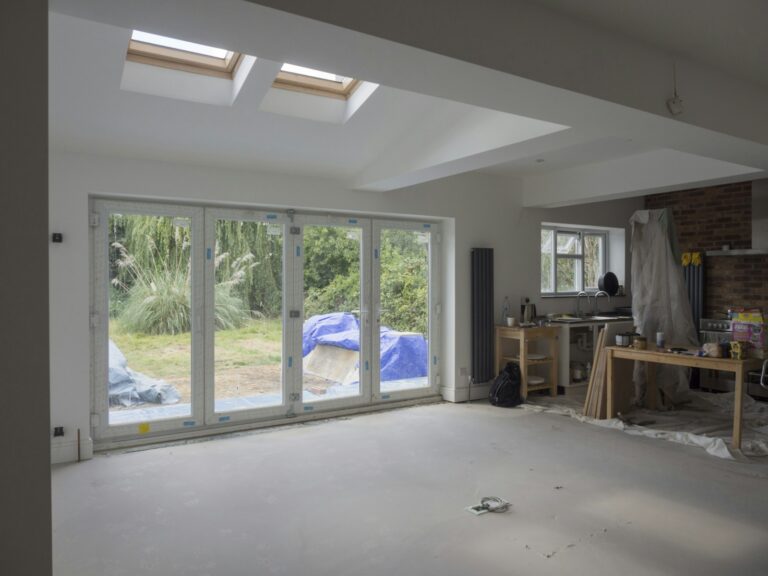
A new single-storey extension with a screeded floor. The insulation and screed are already in the build cost, and the system connects to the existing gas boiler.
| Item | Low | High |
|---|---|---|
| Wet UFH, new build, 20m² at £100–£140/m² | £2,000 | £2,800 |
| Thermostat and connection to existing boiler (our estimate) | £100 | £220 |
| Total | £2,100 | £3,020 |
That’s a small share of a typical house extension cost, and it frees up wall space for kitchen units or glazing. It’s one reason underfloor heating is so common in kitchen extensions.
Worked example 2: electric underfloor heating in a 5m² en-suite
A new en-suite in a loft conversion, with an electric mat under the tiles.
| Item | Low | High |
|---|---|---|
| Electric UFH, 5m² at £50–£90/m² | £250 | £450 |
| Total | £250 | £450 |
Because it’s in a bathroom, the electrics should be certified under Part P. On our running-cost assumptions, a 5m² floor used for two hours a day over winter would cost roughly £36 on electricity at the current cap (our estimate).
Worked example 3: retrofitting wet underfloor heating across a 45m² ground floor
An older home where the old floor comes up across three rooms, with new insulation, pipes and screed.
| Item | Low | High |
|---|---|---|
| Wet UFH, retrofit, 45m² at £150–£190/m² | £6,750 | £8,550 |
| PIR floor insulation (MyJobQuote £220–£400 per 10m²) | £990 | £1,800 |
| Screed, three rooms at about £430 each | £1,290 | £1,290 |
| Zone controls, manifold connection and making good (our estimate) | £320 | £860 |
| Total | £9,350 | £12,500 |
New flooring, redecoration and trimming doors are on top. A job this size takes the ground floor out of use for a while, and the screed needs time to dry. If you’re also planning an extension, it’s cheaper to do both at once.
Adding underfloor heating to an extension? Tell us about your project and we’ll pass your details to one vetted local builder who can price the build and the heating together.
How long does installation take?
Electric systems are quick. Screwfix says one to two days for the system itself, and Checkatrade gives the same for a single room. The mat goes down on insulation boards, the electrician connects the thermostat, and the tiler can usually start soon after.
Wet systems take longer. Screwfix puts it at three to seven days, and Checkatrade at two to five days for a single floor, plus drying time for the screed or levelling compound. Traditional sand and cement screed can take weeks to dry fully before you lay timber or vinyl on top, and the heating has to be brought up to temperature slowly the first time. Your installer should give you a commissioning schedule. Rushing it risks cracked screed and floor finishes that lift.
In an extension, the timing fits naturally: pipes go down after the insulation and before the screed, while other trades work elsewhere on the build. In a retrofit, you’ll lose the use of those rooms for a while, so plan around it.
Ways to cut the cost of underfloor heating
- Do it during other work. The cheapest time to fit underfloor heating is when the floor is coming up anyway. Adding it to an extension or a new kitchen floor costs far less than a standalone retrofit.
- Heat only the rooms that benefit. A downstairs open-plan space and a bathroom are the usual winners. Radiators can stay upstairs, though the Energy Saving Trust notes that you may need larger radiators upstairs so the whole system can run at a lower flow temperature.
- Don’t skimp on insulation. Insulation under the system costs money up front but cuts every bill after that.
- Use the right controls. A thermostat in each zone, and a timer that warms the floor ahead of when you need it, stop you heating empty rooms.
- Check the price guide against your quote. If a quote is far above the ranges on this page, ask for an itemised breakdown. It may include floor work, screed or a new boiler that the guide prices leave out.
- Keep the manufacturer’s warranty valid. Some warranties depend on approved installers, specific insulation boards or a commissioning record, so check before going DIY.
Can you fit underfloor heating yourself?
Many people lay electric mats themselves; Checkatrade puts DIY kits at about £20–£50 per m², plus controls and insulation. But the final connection still needs to be done or checked by a qualified electrician, especially in a bathroom. Wet systems are best left to a heating engineer, because they connect to your boiler or heat pump and need balancing and commissioning.
Is underfloor heating worth it?
It’s usually worth it when:
- you’re laying a new floor anyway, such as in an extension, a garage conversion or when you convert a conservatory into an extension;
- you have, or plan to get, a heat pump;
- you want wall space free for units, glazing or furniture;
- it’s a small bathroom where a warm tiled floor is the point.
It’s harder to justify when you’d need to rip up good floors across a whole house, when the floor would be covered in thick carpet, or when you’d be relying on electric mats to heat large rooms. Underfloor heating also warms up slowly, so it suits rooms you use steadily rather than ones you heat for an hour now and then.
Underfloor heating cost FAQs
How much does underfloor heating cost per m²?
About £40–£90 per m² for electric and £100–£190 per m² for wet, fitted, according to MyJobQuote’s October 2026 guide. Retrofit work in an older home is at the top of each range.
How much does underfloor heating cost for a 20m² room?
Around £800–£1,200 for electric and £1,800–£2,200 for wet, based on MyJobQuote’s 2026 figures. In a new extension where the screed is already budgeted, wet can cost about £2,000–£2,800.
Is underfloor heating expensive to run?
Electric can be, because electricity costs 26.32p per kWh on the October–December 2026 price cap. Wet systems on a gas boiler or heat pump are much cheaper. Our illustrative 15m² room costs about £216 a winter on electric, £73 on gas and £62 on a heat pump.
Is wet or electric underfloor heating better?
Electric is cheaper to fit and suits small rooms like bathrooms. Wet costs more up front but is far cheaper to run, so it’s the usual choice for extensions, kitchens and whole floors.
Does underfloor heating work with a heat pump?
Yes, very well. Underfloor heating runs at low water temperatures, which is where heat pumps are most efficient. In England and Wales, the Boiler Upgrade Scheme gives £7,500 off an air-to-water or ground source heat pump, or £9,000 in off-gas-grid homes until 31 March 2027.
Can underfloor heating be fitted to an existing floor?
Yes. Electric mats and low-profile wet systems can go on top of an existing floor, though they raise the floor level. A full retrofit with new insulation and screed costs more, about £150–£190 per m² for wet according to MyJobQuote.
Do I need building regulations for underfloor heating?
Not usually as a separate application. Electric systems in bathrooms or on a new circuit are notifiable under Part P, so use a registered electrician who can self-certify. In an extension, the heating is covered by the building regulations approval for the whole job.
Sources
- MyJobQuote: Underfloor heating installation cost (updated 20 October 2026)
- Checkatrade: Underfloor heating cost (cost tables updated June 2026)
- Screwfix: Underfloor heating cost guide (undated)
- Energy Saving Trust: Underfloor heating (updated 2 October 2025)
- Warmup: Underfloor heating costs (updated 16 April 2026)
- The Underfloor Heating Store: The ultimate guide to underfloor heating costs (2026)
- Nu-Heat: Underfloor heating costs (August 2026) and Building regulation changes
- Ofgem: Changes to energy price cap between 1 October and 31 December 2026
- Ofgem: Boiler Upgrade Scheme: property owners
This guide is general information for England, checked on 16 November 2026. It isn’t professional advice. Prices, energy tariffs and grants change, and running costs depend on your home. Get a written quote for your own project.