Flat Roof Extension Cost UK (2026): Prices, Roofs & Lanterns
Quick answer
A single storey flat roof extension in the UK typically costs £1,800–£2,700 per m² to build in 2026 (excluding VAT) for a basic to standard finish. That puts a 20m² flat roof extension at about £45,500–£72,500 all-in including fees and VAT outside London. Choosing a flat roof rather than pitched typically saves around £3,000–£7,000 on a 20m² extension.
- EPDM rubber roof covering: roughly £55–£120 per m² on a prepared deck; 20–50 year lifespan
- GRP fibreglass: roughly £60–£160 per m²; 25–40 years
- Roof lantern: around £1,100–£4,200 fitted, average about £2,250
- Typical time on site: 8–12 weeks
Price your flat roof extension in seconds by choosing single storey in our free calculator and entering your size and region.
How much does a flat roof extension cost?
A flat roof is the default choice for most single storey rear extensions in the UK. It is cheaper and quicker to build than a pitched roof, keeps the extension low, and gives a clean, modern look with room for a roof lantern or rooflights. “Flat” is a slight misnomer: the roof is laid to a shallow fall so rainwater runs to a gutter or outlet.
Because flat roofs are standard on most extensions, the overall price is similar to the basic and standard bands for any single storey extension. BestBuilders (August 2026) puts flat roof extensions at £1,700–£2,300 per m² for a standard build and £2,600–£3,200 per m² for premium builds with a lantern, structural glass or very wide sliders. Our calculator uses £1,800–£2,200 per m² for basic and £2,200–£2,700 per m² for standard, excluding VAT.
Flat roof extension cost by size
| Floor area | Example size | Basic finish, all-in | Standard finish, all-in |
|---|---|---|---|
| 9m² | 3m × 3m | £21,500 – £29,500 | £26,000 – £35,500 |
| 12m² | 3m × 4m | £28,000 – £38,000 | £34,000 – £45,500 |
| 16m² | 4m × 4m | £37,000 – £49,000 | £44,500 – £59,000 |
| 20m² | 4m × 5m | £45,500 – £60,000 | £55,500 – £72,500 |
| 25m² | 5m × 5m | £56,500 – £74,000 | £69,000 – £89,500 |
| 30m² | 5m × 6m | £67,500 – £88,000 | £82,500 – £106,500 |
A flat-roofed garage conversion or a small porch costs far less, because the structure already exists or the footprint is tiny.
EPDM vs GRP vs felt roof cost
The roof covering is a small part of the total extension budget, but it decides how long the roof lasts and how much maintenance it needs. Published 2026 prices vary quite a lot depending on whether they include stripping, decking and insulation, so we show the ranges from several sources side by side.
| Roof covering | Cost per m² (covering on prepared deck) | Cost per m² (complete roof build-up) | Typical lifespan |
|---|---|---|---|
| Felt (torch-on, built-up) | £40 – £100 | £90 – £130 | 10 – 20 years |
| EPDM (rubber) | £55 – £120 | £120 – £170 | 20 – 50 years |
| GRP (fibreglass) | £60 – £160 | £150 – £210 | 25 – 40 years |
| Single-ply TPO / PVC | Not widely quoted | £170 – £240 | 25 – 35 years |
| Lead | £80 – £120 | Rarely used for whole roofs | 50 – 100 years |
To put that in context, less.co.uk prices a complete EPDM or GRP roof on a 25m² single storey extension at about £2,000–£4,000, and BestBuilders prices a warm-deck EPDM roof on an 18m² extension at £2,200–£4,000. On a new extension the joists, deck and insulation are part of the main build, so the choice of membrane moves the total by hundreds of pounds rather than thousands.
EPDM rubber roofs
EPDM is a single sheet of synthetic rubber bonded to the deck, so there are few or no seams on a typical extension. It copes well with temperature changes, is easy to repair and has the longest published lifespan of the common options. It looks plain (usually black) and needs careful detailing around rooflights and lanterns.
GRP fibreglass roofs
GRP is a resin and glass-fibre laminate laid in liquid form, curing into a seamless, hard-wearing surface that can be walked on for maintenance. It is good for awkward shapes and comes in several colours. It must be laid in dry weather and by an experienced installer, because poor workmanship causes cracking.
Felt roofs
Modern torch-on felt is the cheapest covering and is quick to lay, but it has the shortest life and is the most prone to blistering and cracking. Many builders now default to EPDM or GRP on new extensions because the price difference is modest over a 20m² roof.
Flat roof extension lifespan
A well-built modern flat roof should last 25 years or more. less.co.uk gives 30–50 years for EPDM and 25–40 years for GRP, BestBuilders gives 40–50 and 25–30 years, while Whito is more cautious at 20–30 years for EPDM. Felt is consistently quoted at 10–20 years. Pitched roofs with tiles or slate typically last 50 years or more.
In practice, lifespan depends more on design and workmanship than on the membrane:
- Adequate fall: flat roofs should be designed with enough fall to avoid ponding; British Standard BS 6229 is the reference designers use.
- Warm deck construction: insulation above the deck keeps the timber warm and greatly reduces condensation risk compared with a ventilated cold deck.
- Good detailing at upstands, edges, outlets and around lanterns, where most leaks start.
- Simple maintenance: clearing leaves and checking outlets once or twice a year.
Ask for the manufacturer’s guarantee and whether the installer is approved by the membrane manufacturer.
Flat roof vs pitched roof extension cost
| Factor | Flat roof | Pitched roof |
|---|---|---|
| Roof covering cost per m² | £50 – £110 | £120 – £275 |
| Extra cost on a 20m² extension | Baseline | About £3,000 – £7,000 more |
| Lifespan of covering | Around 15 – 50 years depending on material | 50+ years for tile or slate |
| Height | Low, around 3m; easier near boundaries | Taller; can clash with first-floor windows |
| Inside | Flat ceiling, ideal for a lantern | Can be vaulted with rooflights |
| Maintenance | Easy access, but check outlets and joints | Fewer leaks, harder to access |
A pitched or lean-to roof can make more sense on a period house, in a conservation area, or where you want a vaulted ceiling. On a typical 1930s semi or post-war house, a well-detailed flat roof with a parapet or slim fascia is usually the most cost-effective choice.
Roof lantern cost
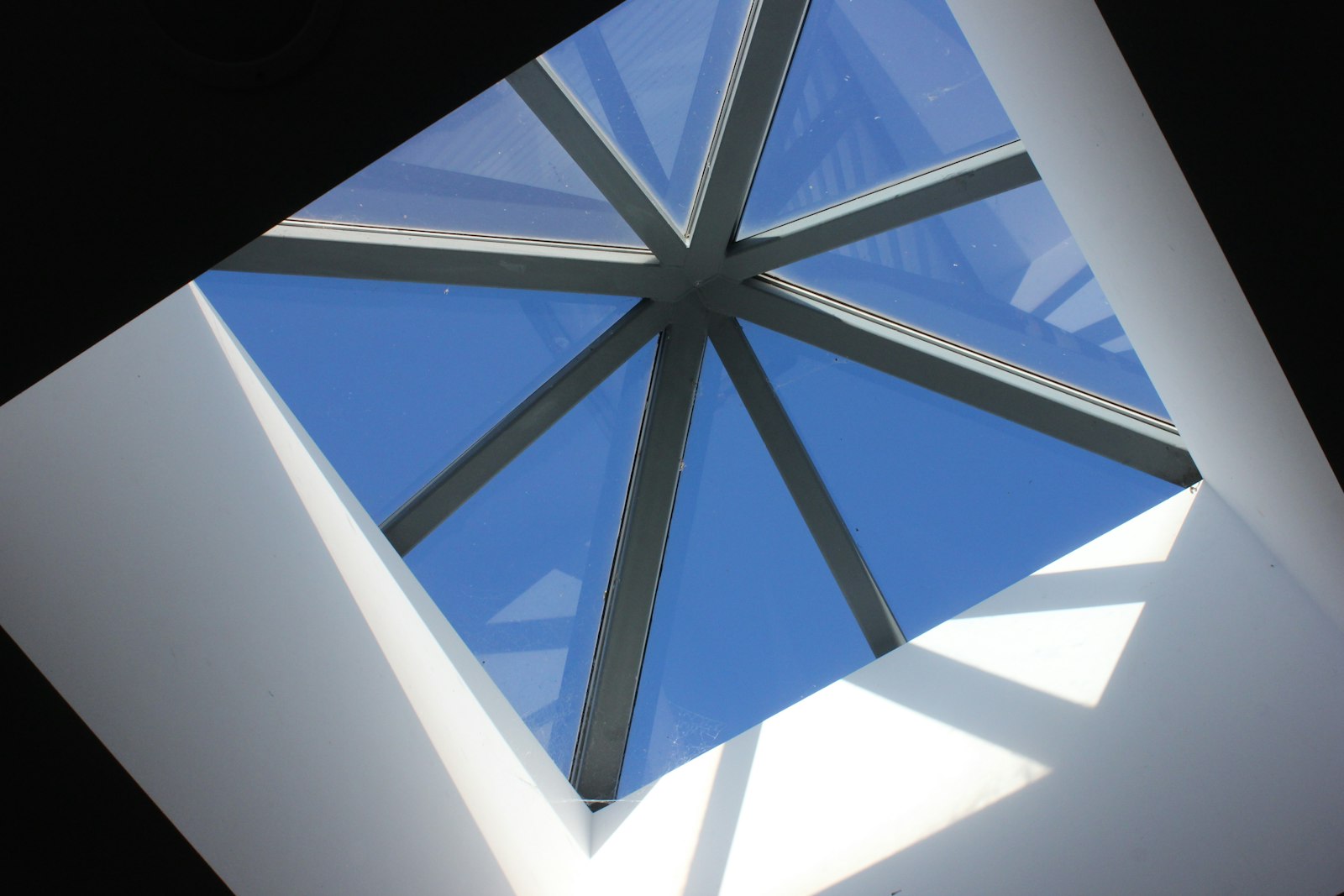
A roof lantern is a raised, pyramid-style glazed structure set on a flat roof. It is the most popular way to bring light into the middle of a deep rear extension.
| Roof glazing option | Typical fitted cost |
|---|---|
| uPVC lantern, small (850mm × 850mm) | £1,100 – £1,500 |
| Aluminium lantern, medium (1.5m × 2m) | £1,900 – £2,300 |
| Aluminium lantern, large or bespoke | £2,500 – £3,800 |
| Timber lantern, medium | £3,200 – £4,200 |
| Pair of flat rooflights (1m × 1.5m) | £1,800 – £3,000 |
| Walk-on structural glass panel | £6,000+ |
MyJobQuote puts the average fitted lantern at about £2,250, with a two-person team taking 2–3 days on a medium lantern. BestBuilders quotes a little higher at £2,500–£4,500 for a 2m × 1.5m unit. Budget for the kerb (upstand) the lantern sits on and for blinds or solar-control glass if the room faces south. Glazing in the roof counts towards the building regulations glazing allowance, which is roughly 25% of the extension’s floor area unless your designer offsets it elsewhere.
Flat roof extension costs by region
Here is our all-in estimate for an 18m² flat roof extension at a standard finish across the UK:
| Region | Regional adjustment | 18m² flat roof extension, all-in |
|---|---|---|
| London | +25% | £63,500 – £82,500 |
| South East | +12% | £57,000 – £74,500 |
| South West & East of England | +4% | £53,000 – £69,500 |
| Midlands | −2% | £50,000 – £66,000 |
| North of England & Wales | −8% | £47,000 – £62,000 |
| Scotland & Northern Ireland | −4% | £49,000 – £64,500 |
Full cost breakdown
| Cost item | Typical cost |
|---|---|
| Build (per m², ex VAT) | £1,800 – £2,700 basic to standard; up to £3,500 high-end |
| Design fees | 4 – 7% of build |
| Structural engineer | £500 – £2,500 |
| Building control | £600 – £1,200 |
| Lawful development certificate / planning application | £274 / £548 |
| Party wall surveyor (if needed) | £1,000 – £3,000 per neighbour |
| VAT | 20% on building work and fees |
| Contingency | 10% of build |
Real example: 6m × 3m flat roof extension, Bristol
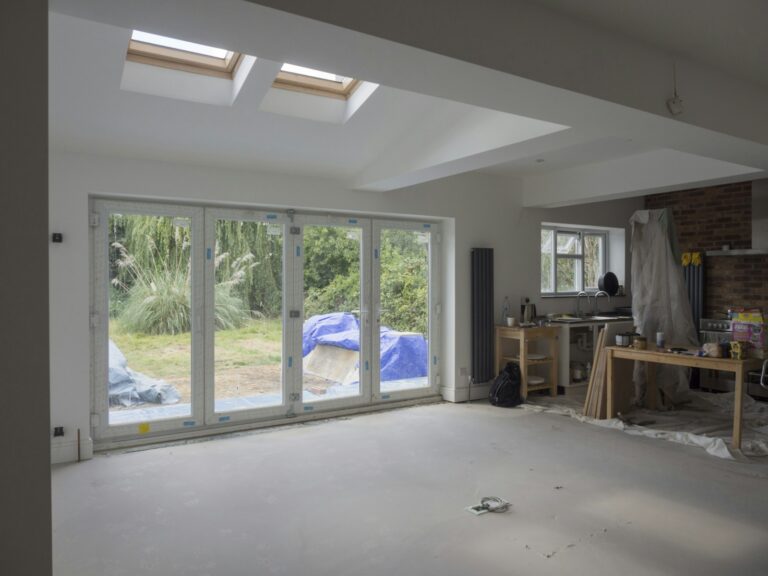
A modelled example, not a quote. A terraced house extends 3m from the rear wall across its full 6m width (18m²) under permitted development. Standard finish: blockwork with render, warm-deck EPDM roof, one medium aluminium roof lantern, aluminium bi-fold doors, rear wall opened up with a steel beam.
- Building work (18m² × £2,450 × 1.04 South West): £45,900, of which the EPDM warm roof covering is roughly £3,000 and the lantern about £2,300
- Design fees (5% of build): £2,300
- Structural engineer: £1,000
- Building control: £800
- VAT at 20%: £10,000
- Lawful development certificate: £274
- Total: about £60,300, or about £65,800 with a 10% contingency
Building on the boundary meant serving party wall notices on both neighbours; one appointed a surveyor, which would add £1,000–£3,000 on top.
What affects the cost of a flat roof extension?
- Roof span: wider extensions need deeper joists, engineered timber or steel to keep the roof flat.
- Parapet or fascia detail: a hidden parapet gutter looks sleek but costs more and needs careful waterproofing.
- Lanterns and rooflights: each opening adds glazing, a kerb and extra detailing.
- Glazing to the garden: wide sliders and structural glass are the biggest cost swing; BestBuilders puts glazing choices at £8,000–£16,000 on a typical flat roof extension.
- Ground and drains: foundations, drain diversions and build-over agreements.
- Region and access: London costs about 25% more on our model.
Planning permission and building regulations
Most flat roof rear extensions in England can be built under permitted development: up to 3m deep on a semi or terrace and 4m on a detached house (6m and 8m with prior approval), no higher than 4m, and with eaves no higher than 3m within 2m of a boundary. A flat roof makes the height limits easy to meet. Using the flat roof as a balcony or roof terrace is not permitted development and needs planning permission. Read our extension planning permission guide for the full rules.
Building regulations apply to every extension. For flat roofs the key points are structure, insulation (Approved Document L sets a limiting U-value of 0.15 W/m²K for new roofs on extensions), condensation control, fire safety near boundaries and drainage of rainwater.
How long does a flat roof extension take?
- Design and approvals: 2–4 months including a lawful development certificate or prior approval
- Build: typically 8–12 weeks on site
- Roof covering: an EPDM or GRP roof on an extension usually takes 1–3 days, and must be laid in dry weather
How to save money on a flat roof extension
- Pick EPDM or GRP over cheap felt: the small premium is repaid by a much longer life.
- Use one lantern rather than several rooflights to reduce openings and leak points.
- Keep the plan rectangular so joists run in one direction.
- Stay within permitted development and get a lawful development certificate (£274).
- Compare quotes on the same specification, including the roof build-up and guarantee.
Does a flat roof extension add value?
Yes, in the same way as any well-designed single storey extension: buyers pay for usable floor space and open-plan kitchen diners. Some buyers and surveyors are wary of old felt flat roofs, so a modern EPDM or GRP roof with a transferable guarantee helps. Keep the paperwork, including the building control completion certificate, for when you sell. For overall returns see our house extension cost guide.
Flat roof extension FAQs
Is a flat roof extension cheaper than a pitched roof?
Yes. On a 20m² extension a flat roof typically saves around £3,000–£7,000, and flat roof coverings cost about £50–£110 per m² compared with £120–£275 per m² for pitched.
How long does a flat roof extension last?
A modern EPDM or GRP roof typically lasts 25–50 years if it is well designed and installed. Felt roofs usually need replacing after 10–20 years.
Which is better, EPDM or GRP?
Both are good choices for an extension. EPDM is usually slightly cheaper and has the longest quoted lifespans; GRP is harder-wearing underfoot and suits complex shapes. Installer experience matters more than the material.
How much does a roof lantern cost?
Most roof lanterns cost £1,100–£4,200 fitted, with an average of about £2,250 for a medium aluminium lantern.
Do flat roof extensions need planning permission?
Not usually. Most single storey flat roof rear extensions fall within permitted development, but a roof terrace or balcony on top does need planning permission.
How much does a 4m × 4m flat roof extension cost?
About £37,000–£59,000 all-in outside London for a basic to standard finish, including fees and VAT. In London, budget roughly £56,500–£74,000 for a standard finish.
Get free flat roof extension quotes
Tell us about your extension and we’ll connect you with vetted local builders who can quote. Free and no obligation.
Planning a kitchen in the new space? See our kitchen extension cost guide or try the cost calculator.
Sources and methodology
- BestBuilders, How much does a flat roof extension cost per m² (2026) (updated 16 August 2026).
- MyBuilder, Flat roof vs pitched roof cost (updated 21 August 2026).
- less.co.uk, How much does a flat roof cost in 2026? (2026).
- Whito, Flat roof replacement cost UK (updated 17 September 2026).
- MyJobQuote, Roof lantern cost (updated 9 October 2026).
- HM Government, Approved Document L, Volume 1: Dwellings (2021 edition, incorporating 2023 amendments).
- National planning application fees for England from 1 April 2026.
- How we calculate our cost estimates
All prices are guide figures for 2026 and vary with your property, specification and location. Roof covering prices depend on whether stripping, decking and insulation are included. Always get detailed written quotes before starting work.